
Why MIGENS & CO.?
A Founder's Story
To answer this properly, I'm afraid this story is going to take a while. It has to — because it begins with me.
Perhaps one day, when MIGENS & CO. is known to the world and someone genuinely wants to know why it exists, they'll sit down and read the whole thing. I'll start it now, in that hope.
The Girl with the Lion's Mane
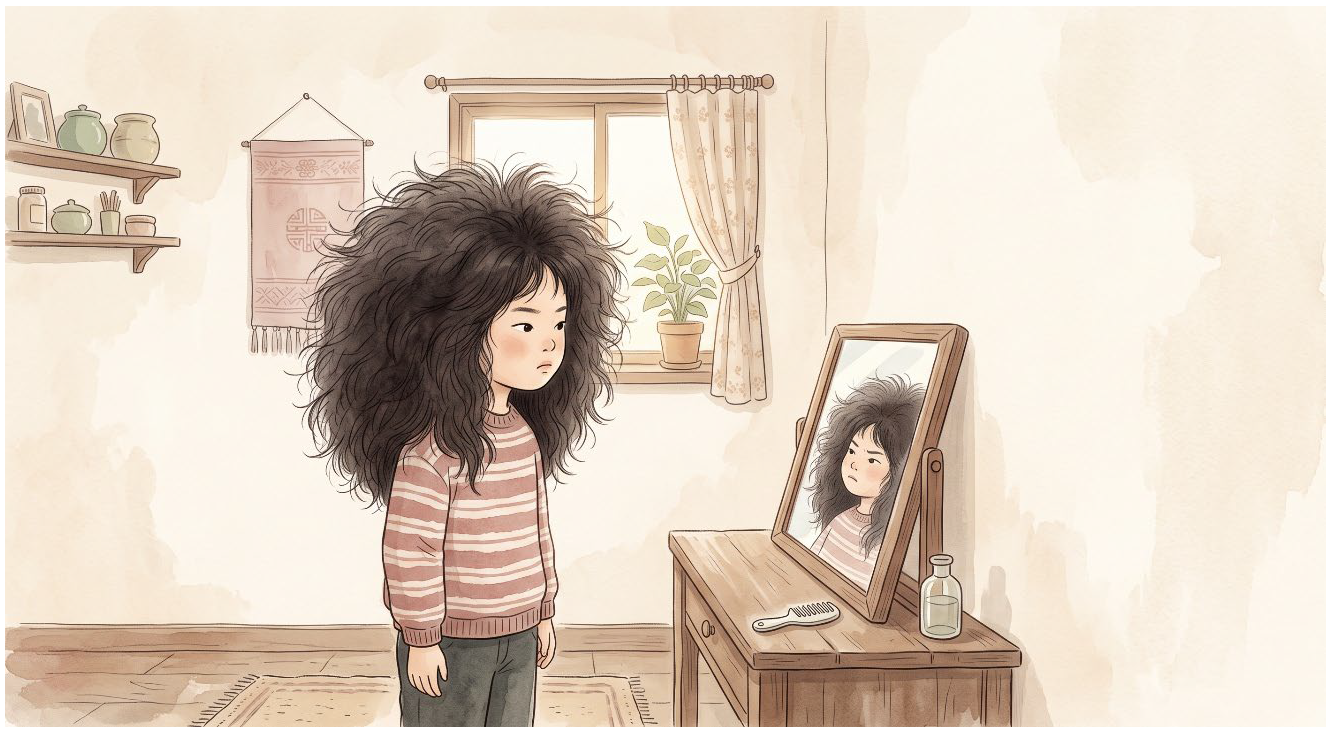
Ever since I was a little girl, I had a lot of hair. And I don't mean "a lot" in the polite, almost-complimentary way people sometimes mean it. I mean overwhelming. Defiant. The kind of hair that seemed to have its own agenda. Thick, coarse, frizzy, and stubbornly, magnificently its own.
Picture a lion. A very healthy one. That was me.
No matter how carefully I brushed it before school, by lunchtime, the lion was back. On rainy days, it was spectacular — and not in a good way. While my friends' hair would quietly flatten and dampen in the drizzle, mine would expand into its full, wild glory, as though responding to some ancient, irresistible call of nature.
I absolutely hated it.
We all carry something like that growing up, don't we — that one part of ourselves we haven't yet learned to love? I desperately wanted the sleek, swaying bob that everyone else seemed to have been born with. And so, at a very young age, I became a regular at the local hair salon.
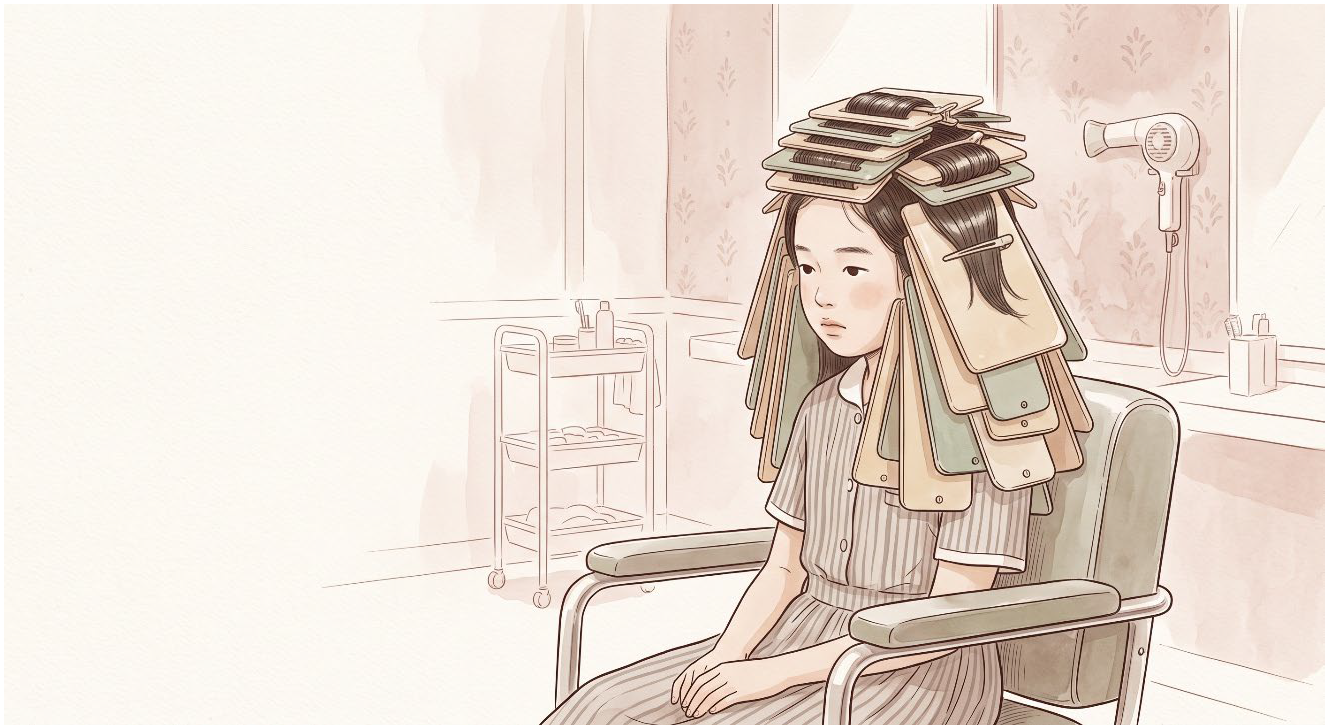
Back then — this was about forty years ago — going to the salon wasn't the warm, pampering ritual it is today. Getting a chemical straight perm was less of a beauty treatment and more of a test of human endurance. Thick plastic boards, soaked in chemicals, were attached to sections of hair and left there for two hours. Because my hair was so dense, I needed nearly twice as many boards as anyone else.
I genuinely don't know how a ten-year-old's neck held up. And the smell — sharp, chemical, almost industrial — was the kind that settles into your clothes, your memory, and somehow, your sense of determination.
And yet, I never complained. Not once.
Because when it was over, someone completely different appeared in the mirror. Or at least, that's how it felt to my ten-year-old eyes. Smooth, flowing hair. A neat, orderly reflection. And a brief, intoxicating rush of confidence. To feel — even for just a few hours — like someone who actually belonged in her own reflection: for that, I would have sat through it a hundred times.
Looking back, it strikes me as both sweet and rather remarkable. At ten years old, I had already stumbled into one of life's most complicated truths — the strange, tangled relationship between how we look and how we feel about ourselves. The little lion-maned girl didn't know it yet, but she wasn't fighting her hair. She was learning, one uncomfortable hour at a time, what it truly means to become yourself.
The Mirror I Carried Everywhere
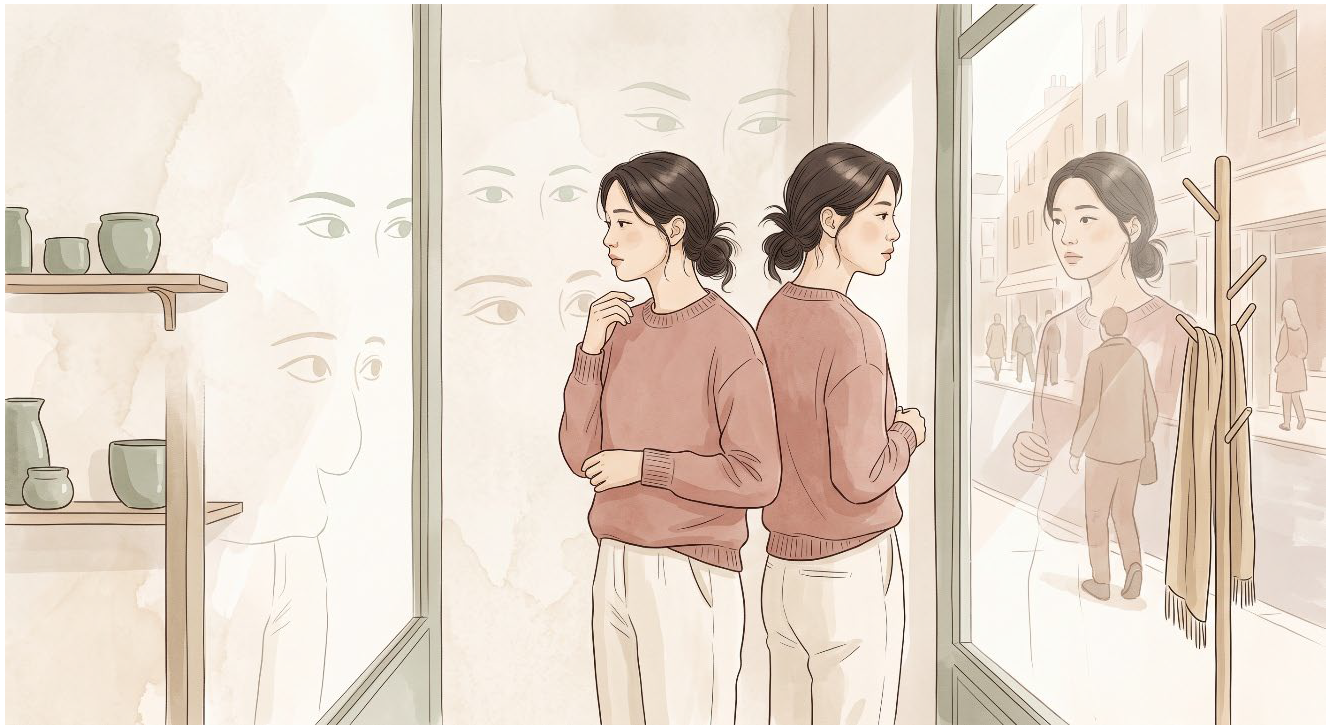
Growing up in South Korea, I spent a long time living beneath the quiet but relentless weight of other people's eyes. I think most people raised there would recognise what I mean — even if they'd never say so out loud. We like to pretend otherwise.
"Oh, I couldn't care less what people think," we say — while sneaking one last glance in the mirror before popping out to the corner store for a bag of crisps. I was no different. Is my hair alright? Is this outfit strange? Has my makeup smudged? No one was watching me through a camera. And yet I was constantly auditing myself, as though my appearance were a kind of courtesy I owed the world.
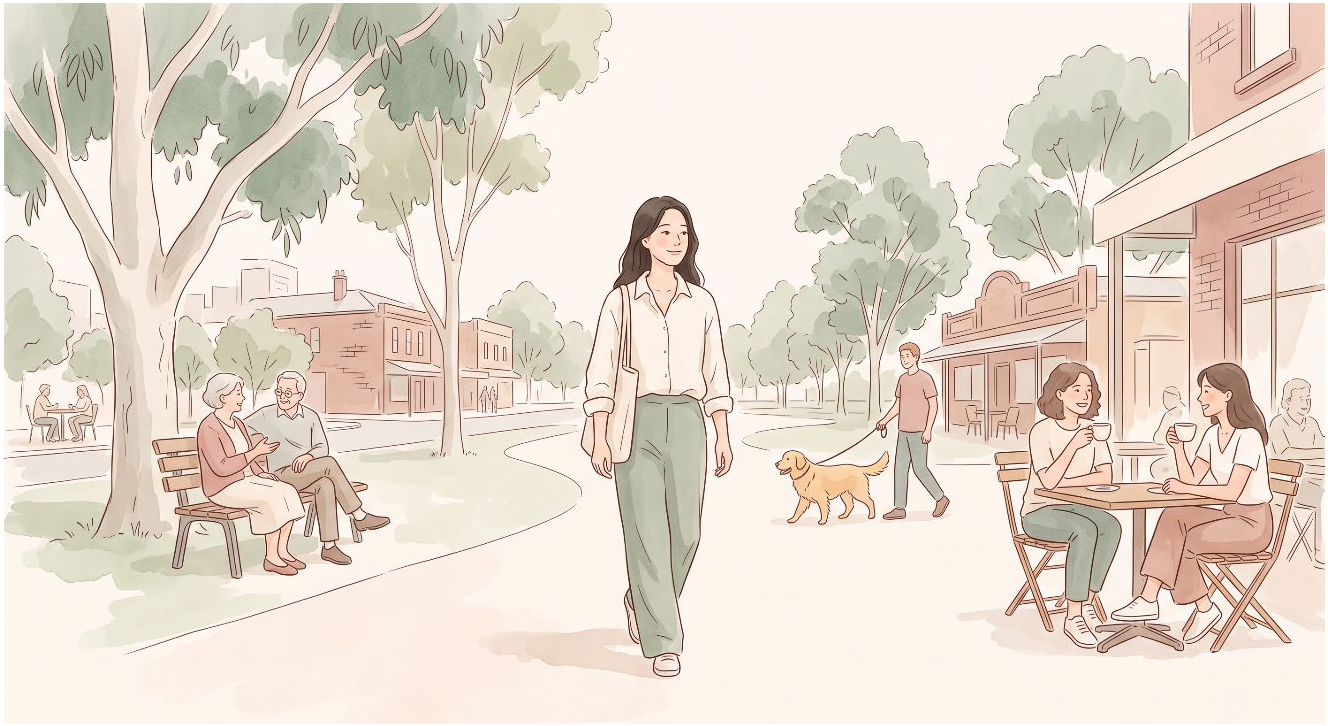
Then I came to Australia. And for the first time in my life, I tasted something I didn't even have a name for.
Something close to freedom.
In this new country, nobody knew me. Nobody remembered what I'd worn the day before. Nobody raised an eyebrow if my hair looked a little wild.
At first, that collective indifference felt strange — almost lonely. But gradually, almost without my noticing, it softened into something like relief. I walked out of the house without makeup. Nothing catastrophic happened. Some mornings I didn't even check the mirror. If the little lion-maned girl could have seen me, she would have been absolutely horrified.
Somewhere between the wide skies and the unhurried pace of this country, I began — slowly, almost secretly — to let go. And very quietly, the reason I took care of my appearance began to shift. It was no longer an exhibition. It became something else entirely: a private act of satisfaction, done for no one but myself.
The Day the Engines Stopped
In that freedom, I built a life. I made a home. I became a mother to three children I am enormously proud of. I started a business. From my thirties into my mid-forties, my life moved like a current I had long since stopped swimming against — I simply let it carry me, and blinked, and somehow years had gone.
Then the pandemic arrived, and the world locked down overnight. It was one of the strangest experiences I have ever had. It felt as though someone had reached into everything and simply switched it all off.
The earth just… stopped.
The relentless, battle-like rush of daily life ground to a halt, and suddenly my family and I were just — there. Together. In the house. Looking at each other. Unsure what to do with the silence.
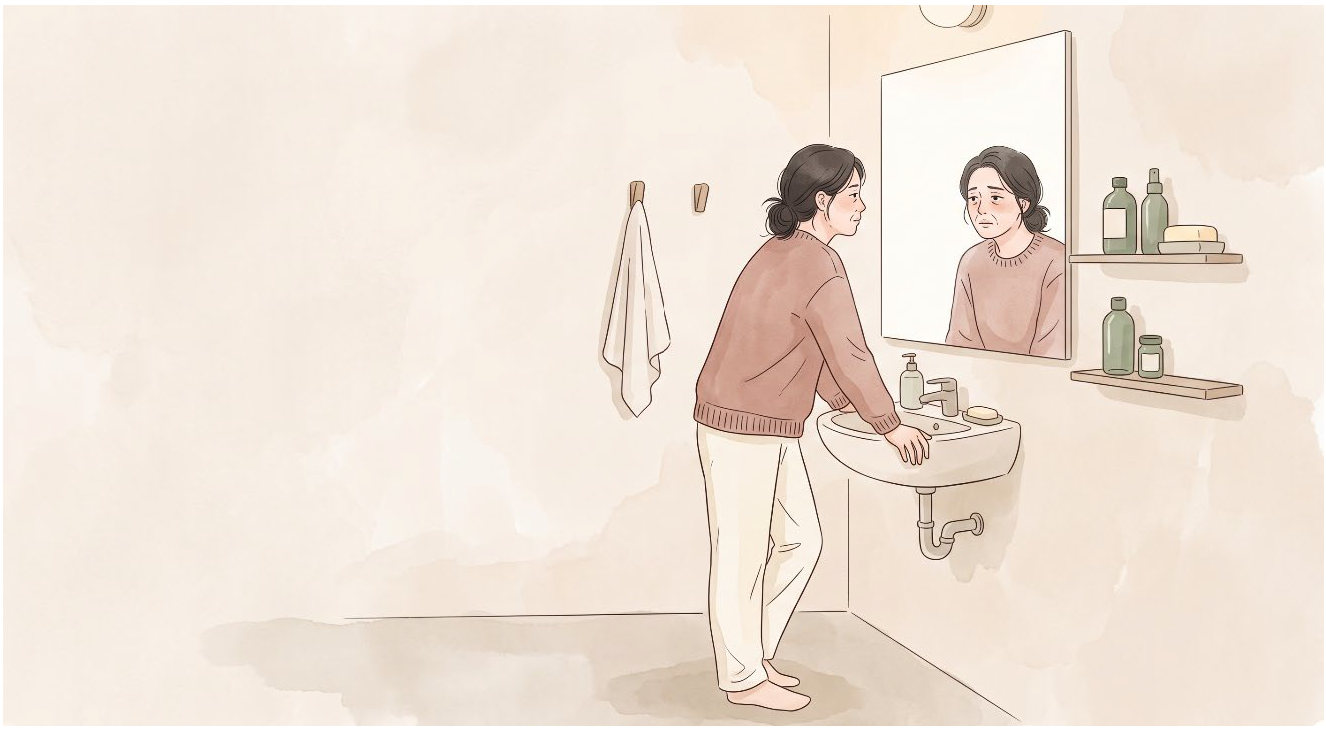
And it was in that silence — standing in front of the bathroom mirror one ordinary afternoon — that a question surfaced from somewhere inside me. Quiet, uninvited, and entirely without warning.
"Excuse me… but who are you?"
It wasn't that I'd stopped looking in mirrors. I hadn't. But that day, the face looking back at me felt genuinely unfamiliar. When did this happen? I was in my mid-forties, but the woman in the mirror looked deeply, unmistakably exhausted — as though all the vitality had quietly packed its bags and left without telling me. A wave of sadness moved through me that I hadn't seen coming.
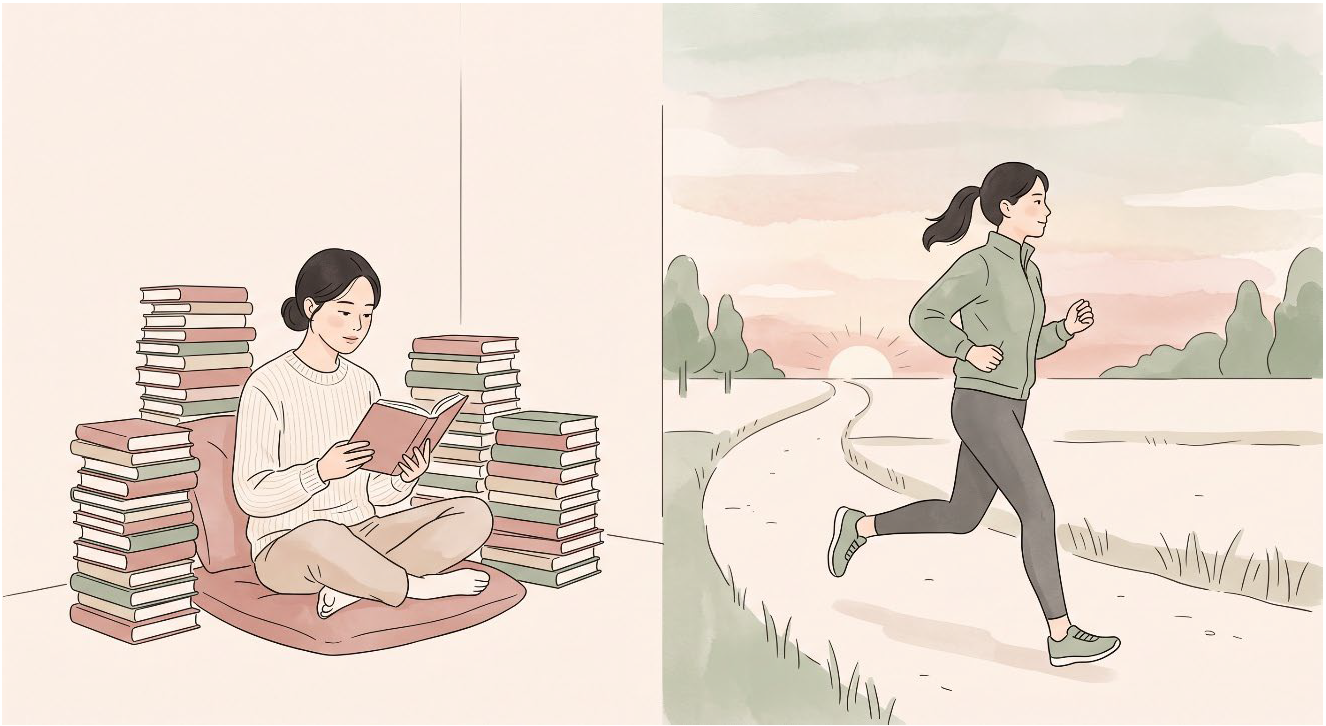
How did I get through it? Books, first. I bought them obsessively, read them hungrily — convinced that somewhere in the world, someone had already walked through this particular valley and written their way out of it. Being locked inside turned out to be rather good timing for that.
Then changes. I stopped drinking coffee — something I had been using as a substitute for actual rest for thirty years. I wanted to move through the day on my own energy, not borrowed fuel. And I started running.
By the time the world reopened and normal life resumed, I had become — quietly, genuinely — a different person. I slept deeply. I woke early. I protected the first hours of the morning as though they were the most sacred thing I owned.
And that was when the truth finally landed.
It wasn't that I hadn't had time to take care of myself. I simply hadn't thought it mattered. For fifteen years, I had left myself — the actual me, not the mother or the entrepreneur or the capable woman who got things done — quietly abandoned in the corner. My three children had all grown up beautifully and found their own way in the world. My business had found its footing. But I, the architect of all of it, had been slowly withering away in plain sight.
When I finally faced that, I cried. Not from grief, exactly. From something closer to apology. I was so deeply, genuinely sorry — to myself.
Ten Years, and I Never Once Asked
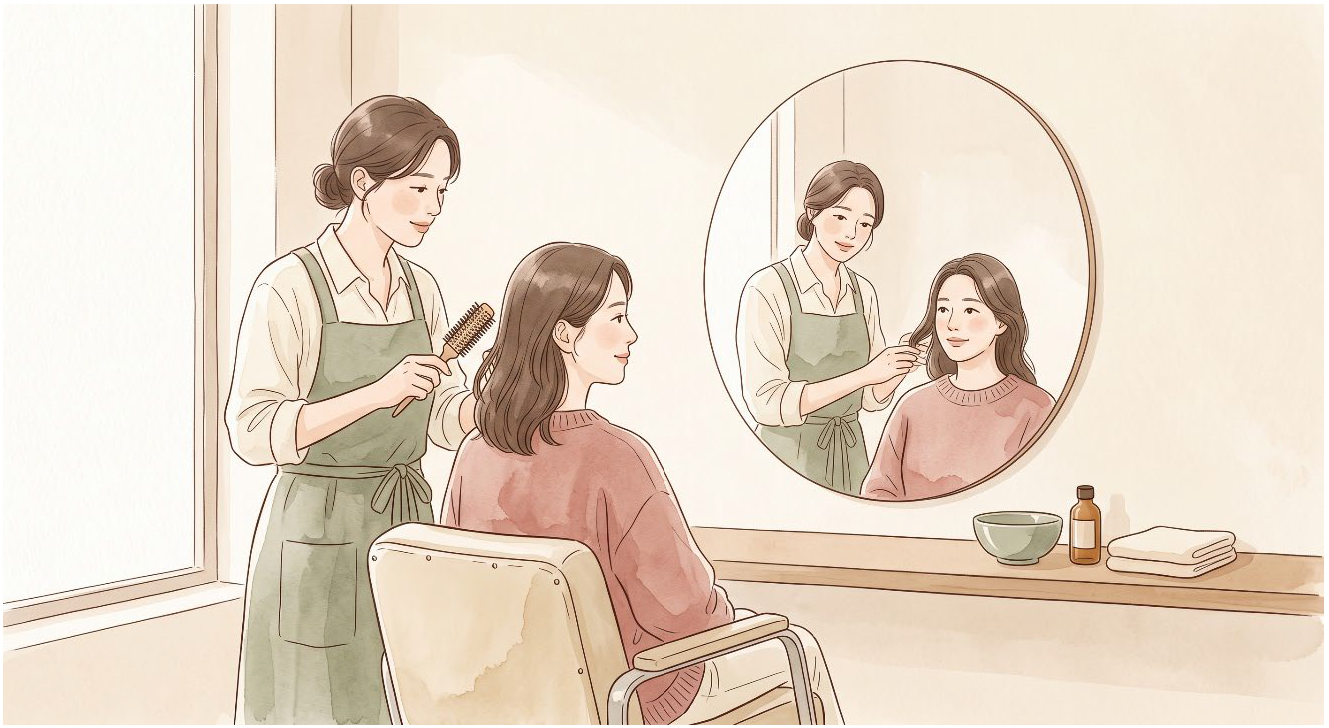
This was about a year ago. I was back in the salon chair — the same one I'd been sitting in for nearly a decade — getting a perm from the stylist who had looked after my hair all that time. She was carefully applying the solution when, quite suddenly, she began to tell me something.
It was about her mother.
A conflict that had been going on for years. Wounds that hadn't healed. A long stretch of carrying it all alone. I sat quietly and listened.
Afterwards, I found myself thinking: how strange. A decade. I had been coming to this woman for a decade, and we had never once had a real conversation.
Though — if I'm honest — it made complete sense. I have always valued efficiency, perhaps a little too much. The moment I sat down in that chair, out came the book.
Why spend three hours in idle chat when you could finish a novel? Looking back, I must have been a rather cold customer. Transactional, even.
But something shifted after that day. I started thinking about her before I'd even left the house. How is she doing? Has anything changed with her mother? Is she alright?
I was no longer going to the salon to have my hair done.
I was going to meet a person.
It moves me now — and embarrasses me, a little — to think how blind I had been. All those years, I had been pouring my heart into the fictional lives inside my books, while completely missing the real, living, breathing story sitting right in front of me.
The Hands That Remember Everything
A few weeks ago, I visited a salon in Seoul during a work trip. This time, the book stayed in my bag. I wanted to be entirely present for whatever was about to happen in that chair.
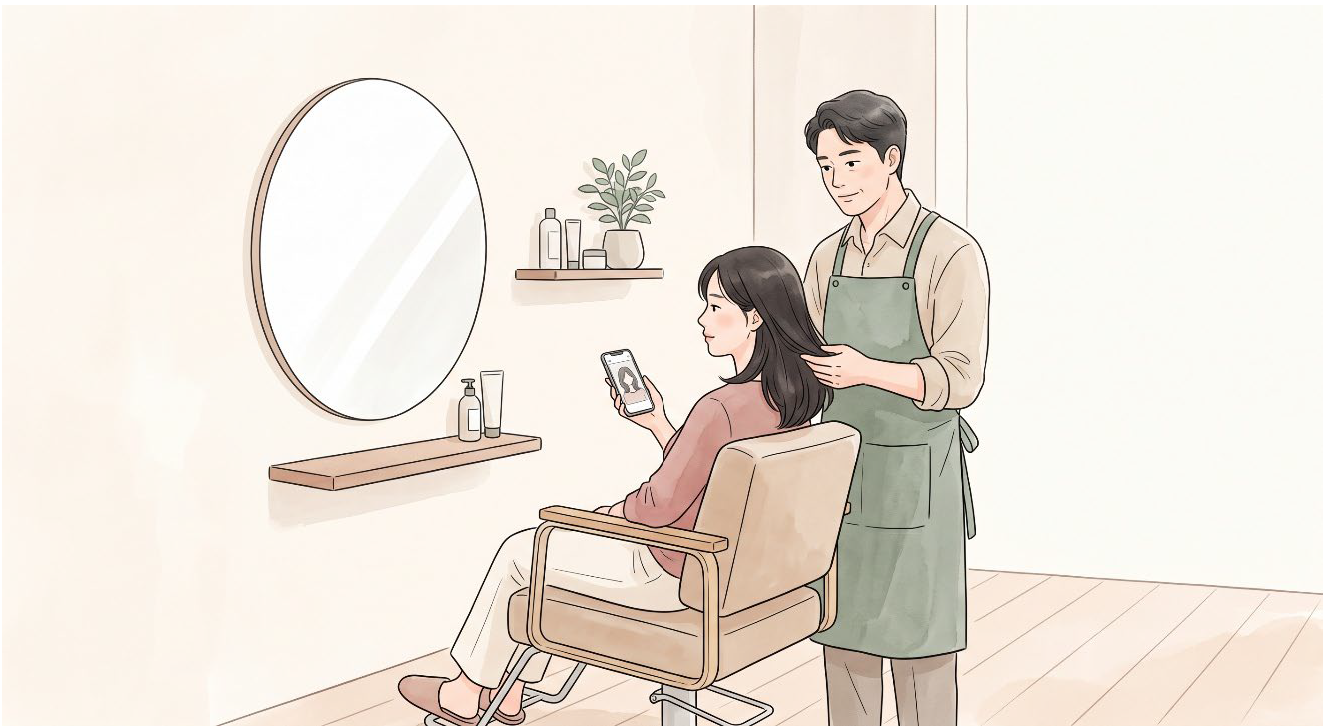
I showed the senior designer a screenshot I'd saved from Instagram — one of those AI-generated "Best Bob Cuts for Women in Their 40s and 50s" images. I was, I told myself, a well-prepared customer. An informed one. Smart, even.
(I really did believe that.)
My designer studied the photo quietly, then began asking questions. How do you normally dry your hair? What is it about your current style that bothers you most? It felt like being seen by a doctor who actually listens to your whole life before writing a prescription.
When his assessment was complete, he delivered his verdict — calm, precise, and entirely unsparing:
"This cut will look exactly like that photo today, when you walk out of here. But tomorrow morning, when you try to style it yourself at home, your wrists are going to give out."
He wasn't going to give me what I'd asked for. And the moment he said it, something in me went still. Not offended — intrigued. In the space of about one second, I understood that this person was different from every other stylist I had ever sat in front of. There was a conviction behind his refusal. A quiet, professional stubbornness that I found, unexpectedly, rather wonderful.
He went on to suggest something tailored specifically to my hair — working with it rather than against it, ensuring it would look put-together without requiring heroic effort every morning. I quietly folded my screenshot away and handed my hair over entirely. These days, every morning in Australia when my hair simply falls into place, he comes to mind.
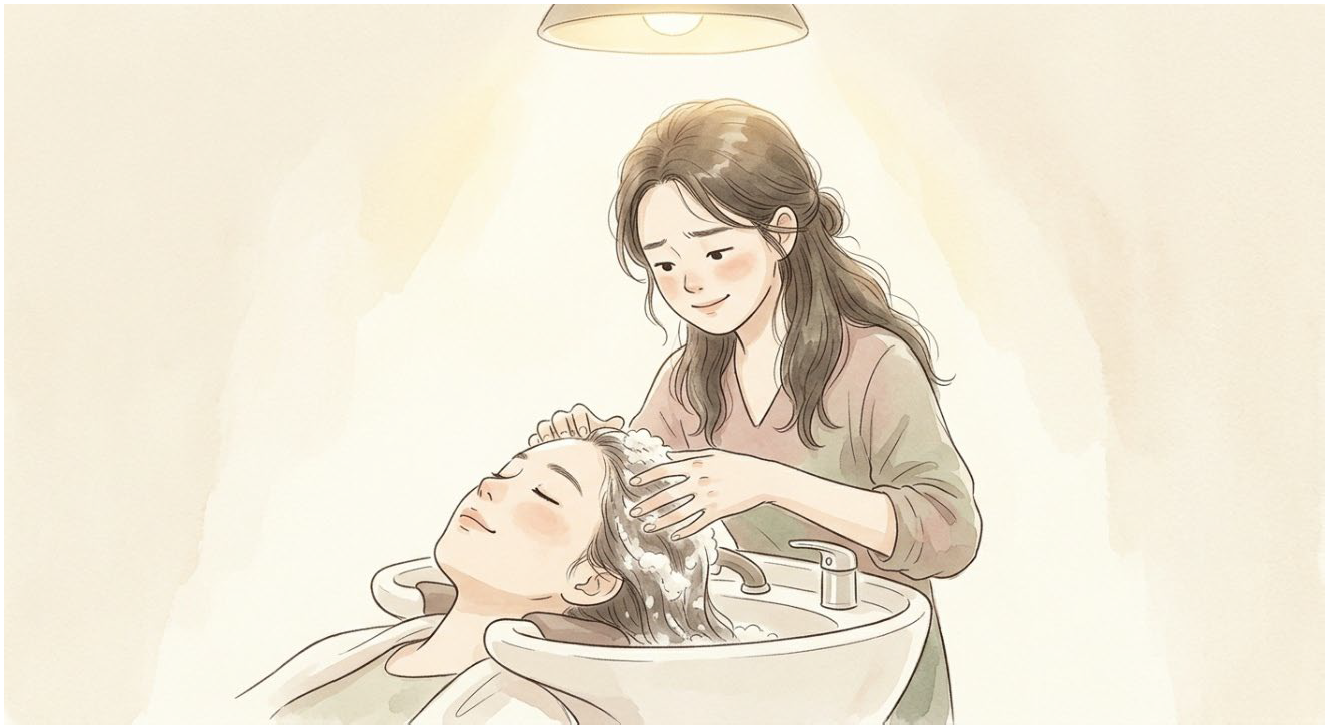
But the story didn't end there. After the cut, I moved to the washing station. The assistant who shampooed my hair had a touch that was — I noticed it immediately — unusually careful. Almost tentative. Something about it made me want to ask.
"How long have you been doing this?"
She smiled, a faint blush rising in her cheeks, and said:
"Today is actually my second week."
Everything changed in that moment. Through those careful, slightly trembling hands on my scalp, I could feel it all — the fierce concentration, the terror of making a mistake, the sheer, desperate sincerity of wanting to get it right. It transferred through her fingertips and landed somewhere in my chest.
I will not forget her face. Because I know something about how hard and how lonely the early years of this work can be, I sent her a silent and rather fierce blessing — please don't give up, please keep going, please become the extraordinary artist I already believe you could be.
I walked out of that salon having done far more than change my hair. Across a mirror, I had met two real people. The kind you don't forget. The kind who stay with you, long after you've left.
On the Flight Home
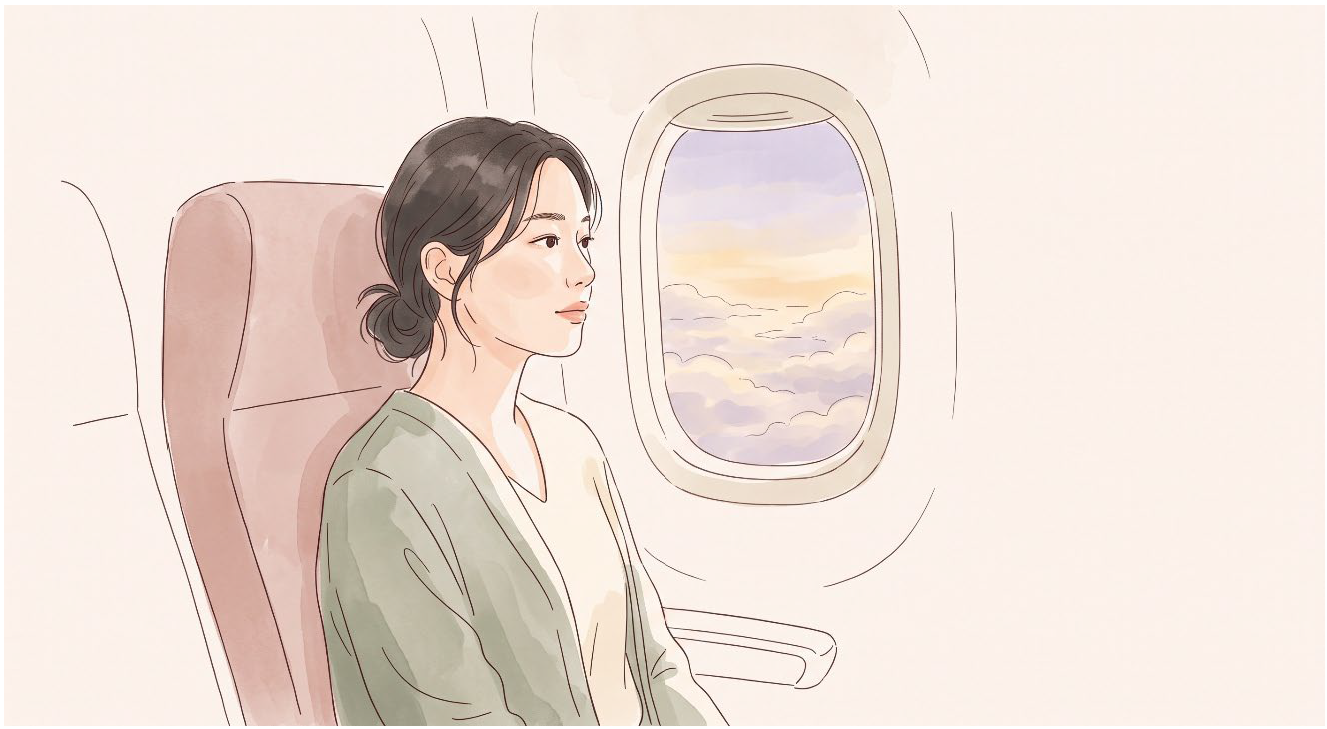
Somewhere over the ocean, on the way back to Australia, I found myself thinking.
Why do I care so much about these people — the stylists, the assistants, the ones who stand on their feet all day and pour their hands into other people's heads? Why does it matter to me how their clients remember them? Why does the question of what kind of person they're becoming feel so urgent?
And then, quite simply, I understood. It was never really about hair.
It was always about people.
I spent a long time believing that beauty was about appearance. Good hair. Good skin. Good clothes. Good style. I still think those things matter — genuinely, I do. Taking care of how you present yourself is one of the ways we show up for our own lives. But I know now that there is a kind of beauty that none of that fully explains.
Some people are magnetic without being conventionally striking. Some people make you feel better simply by being in the room. Some people you remember long after the conversation has ended. Why?
I've come to believe the answer has something to do with how they treat themselves.
A person who takes themselves seriously — not in an arrogant way, but in the quiet, daily sense of not abandoning themselves — something of that shows. It becomes part of how they move through the world. It reaches other people. You can't really hide it.
Perhaps that's what I loved so much about the gardener next door. It wasn't the flowers. It was the evidence of having been loved. And people — I think this is almost universally true — can always tell when something has been loved.
MIGENS & CO. began in that thought. I wanted to look more carefully at beauty. I wanted to understand people more deeply. And I wanted to walk alongside someone as they became — slowly, imperfectly — a better environment for themselves and for everyone around them.
Am I a Good Environment Right Now?
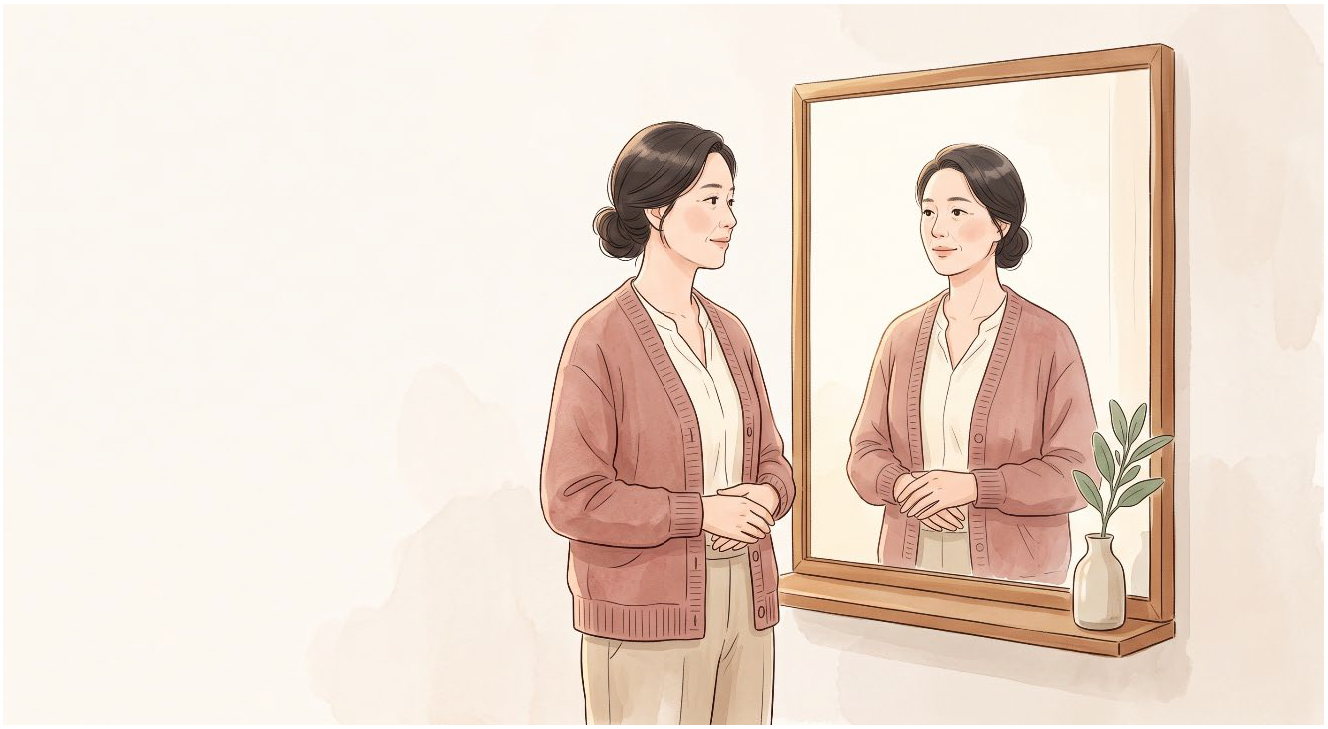
I still look in the mirror. I just don't ask "who are you?" any more. I know who it is, these days.
But I do ask something else.
"Am I being a good environment for myself right now?"
Am I letting myself rest enough? Am I being kind enough to myself? Am I actually paying attention?
Honestly, I don't always know the answer. I suspect I never will, not perfectly.
But I do know this: the life I live when I'm asking that question is a different life from the one I was living before.
Maybe MIGENS & CO. isn't really a company at all. Maybe it's just the space I built so I would never stop asking.